“Your kung fu is strong, and your magic is powerful…” NCIS: LA, Cheo Coker-style

Watching Collateral, Cheo Coker’s first episode for NCIS: LA, is an inspiring experience.

His former show, SouthLAnd, was all about character, and only about the plot and the crimes when it related to character. SouthLAnd has never been about solving the crime; it’s about understanding the character. Whereas, NCIS: LA is a plot juggernaut, a procedural freight train that requires its characters to deliver high volumes of exposition as its multi-layered crimes are uncovered. Coker has proved himself the master of deep character revelation through minimalist and fiery dialogue; what would he do with a show that demands huge blocks of time devoted to the procedural details?

Turns out, a tremendous amount.

Writers of TV scripts, movie scripts… hell, whatever kind of writer you are, Coker’s episode contained some invaluable lessons.

1. Character.

In a heavy procedural like this, the majority of the 42 minutes running time is taken up with blocks of discovery, exposition and payoff. That’s the point of the show, and NCIS: LA delivers that with style. What Coker did was fill those brief interludes between procedural necessities with a furious flurry of character-revealing dialogue and banter. He added depth and soul, where many shows would settle for “we’re here, and now we need to go… there.” His riffs on LPs and cartoons allowed him to create a fast-moving, warm dynamic between Callen, Nate, Nell and Hanna. The lesson: every moment, every line and beat and reaction, is a chance to deepen your characters and their relationships. Don’t waste a second of your screenplay. 

Taking every opportunity to deepen relationships

2. Seriously, Character.

But Coker didn’t stop there. Even during the more mechanical components of the plot, he was reflecting character, taking each opportunity to shine a light into the team, showing us what makes them tick, what makes them work well together. For example, even a quick comment about grandstanding partners (along with the reactions in the room) added to what we know about the team and how they feel about each other. The lesson: exposition can be a bitch — so make it fun, vivid, naturalistic… and make it reveal something about your characters as well as the story. The facts of the case are best served up while they are also telling us more about the speaker and the listeners. If your plot point is also a character point, you’re winning.

Exposition alert! Coker makes scenes like this just pop

3. Pop Culture.

Damn. Coker is the true master of the pop culture riff. No one is doing it like him. He emptied clip after clip of pop culture into his SouthLAnd scripts (“Where’s Optimus Prime when you need him?”, riffing on James Ellroy, or Sonny Chiba), and he stepped up again in Collateral, firing off ongoing bits about Hong Kong Phooey vs. Underdog, Isaac Hayes and vinyl LPs vs MP3s, James Bond blu ray box sets, video games… the list goes on. The lesson: keep things LIVELY. It doesn’t have to be via pop culture — that’s hard to pull off naturalistically unless you have a genuine love of and feel for your references — it can be via snark too — but keep the dialogue cracking, multi-dimensional and, above all, revealing. It’s a blast when characters face off about pop culture in the middle of a crisis (a great example of this is Quentin Tarantino’s “silver surfer” rewrites in Tony Scott’s Crimson Tide). It’s also a blast if your characters can talk in snark-tightened one-liners, even as they are discussing plot. Make each line do at least two things. Bring the swagger.

Swagger just out of shot

NCIS: LA is a cool show, with a quick-moving format that can handle cases that broaden their scope as the investigation progresses. Coker’s script was an exceptional example of how to accomplish procedural heavy lifting and character/relationship revelation on the fly, while having an awesome time doing it.

If you can tell stories like that, your viewers/readers will stay with you to the end.  

Homeland: Changing The Game

I can’t believe it’s taken me all of season one and five episodes into season two to write about Showtime’s adrenaline ride Homeland, a show that can only be described as the greatest drama on television. It’s up there with SouthLAnd, but in a different way. SouthLAnd is resolutely anti-plot, existing intensely, almost existentially in the moment, while Homeland is the absolute pinnacle of tightly-plotted, brutally ratcheted series-spanning conflicts and tensions. Where they meet is in their equally brilliant treatment of character; the brutal paring back of psychological layers, the unflinching dismantling of everything their characters believe.

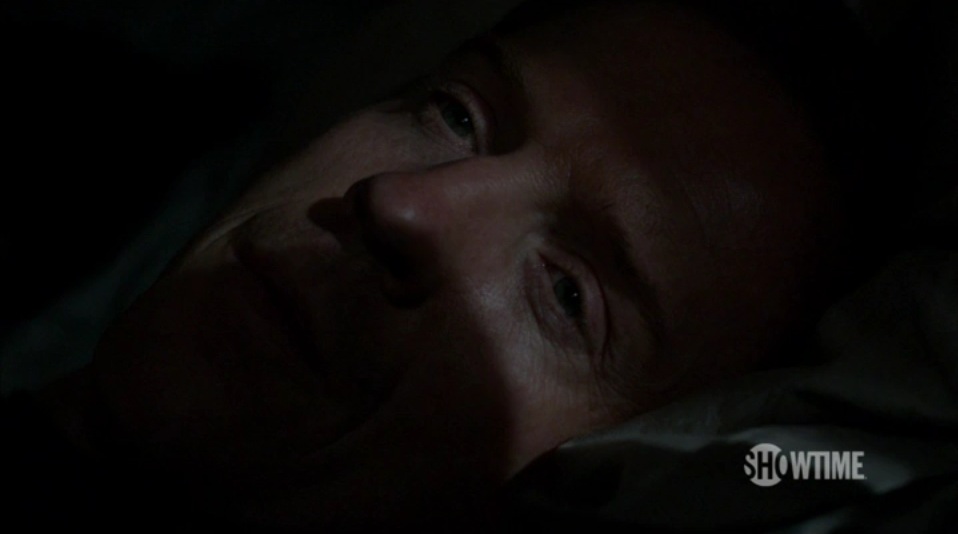
Everything in shadow… Damien Lewis as Brody

Homeland really does have it all. Gut-wrenching tension and reversals, compellingly real characters who wear their complexities and contradictions lightly and naturally, an insanely suspenseful master plot that is apparently constructed from a thousand insanely suspenseful moments that have you on the edge of your sofa, on your feet, shouting at your TV, and watching it over again to make sure that DID just happen. The writers of this show are obviously masters of furiously fast pacing, throwing down HUGE story revelations and dropping massive story bombs in the earliest episodes – already, in just five episodes of season two, we’ve had at least three monumental GAME CHANGING scenes, any of which would be another series’ season finale (or even series finale). But the writers of Homeland have almost casually taken us to these extreme places, with SEVEN episodes still remaining. This is how you know: they must have some extreme shit planned for the rest of the season. And they’ve shown us we can trust them. Trust is key to long running dramas: are the writers just bullshitting their way through, or do they have a plan? The Homeland writers have the tightest grip on their story, from the “in the moment” beats, to the arc of each season. The beats, scenes and episodes of this show are solid and interlock tightly. There are no gaps, no wobble in the construction. Just a series of emotionally and cerebrally detonating storylines that power through an ever-escalating sense of suspense.

As writer Alexander Cary has said, “if we have a good story idea, we go there, and we don’t delay it, we don’t bank it. We write ourselves into corners.” The way they write themselves out of those corners is always exhilarating; high-wire writing, executed perfectly, every time.

Anything can happen… Claire Danes as Carrie Mathison

This writers room, led by 24‘s Alex Gansa and Howard Gordon, gives us everything.

There are small, breathless character moments (Dana and Finn in the Washington Monument, their reflected faces held suspended in the dark glass above the glittering city lights); bad-ass moments of all kinds (“The Smile,” the snarky banter between Carrie and new analyst Peter Quinn, Saul’s gruff awesomeness, terrifying chase scenes); gripping psychological arcs; deep wells of emotion; characters pushed to their absolute limits; and, of course, THAT PLOT… that vertigo-inducing sense of WHAT THE HELL CAN THEY POSSIBLY DO NEXT?!

The nature of threat: any scene can explode at any time. Rupert Friend as Peter Quinn.

In Homeland, character revelations and plot vertigo moments happen at the exact same time; plot and character are the same thing in this show. The interrogation scene in episode five, where Carrie and Brody are both utterly raw, her with love, him with the collapse of everything in his world, is one such example: it’s staggeringly riveting, finely-detailed, deeply soulful, and, in its most extreme, extraordinary, series-changing, character-revealing moment, utterly quiet and low-key. One simple word after the LONGEST pause in TV history changed the game. AGAIN.

The loudest of truths in the quietest of moments

That’s something I love, and it has changed the shape of my own writing. You can’t truly love something without it changing you. This is definitely one of the joys of being a writer: when other writers show you amazing possibilities and just make you want to get back to the laptop and write something new, something better. This beautiful hybrid of powerful, engaging character work and OMG WHAT HAPPENS NEXT plotting is something I was aiming for with ALTERED; and, now I’m writing book two of that series, I’ve essentially got a sticker above my desk that reads WWTWOHD (What Would The Writers Of Homeland Do… not exactly catchy, but damned effective). It’s a show that any writer of any kind can learn from – and should learn from. It’s an extraordinary example of brilliant storytelling.

Anticipating SouthLAnd Season 5

Rewatching SouthLAnd‘s great and groundbreaking season 4 got me thinking: where could or should the show go in season 5?

In the SouthLAnd, anything can happen

It’s a show that thrives on evolution, after all. In a Doctor Who kind of way, it regenerates with every season. And it does this boldly, fearlessly… SouthLAnd style. From Wednesday to Thursday (Jonathan Lisco’s rather brilliantly low-key titles for eps 1 and 10), the show took some pretty hardcore narrative leaps, and went to darker places than ever before. It was more distilled, its signature intensity crystallized into something even harder and more beautiful. It’s made up of shards that are brutally sharp and reflect the light, sometimes blindingly. I mean this narratively, visually, emotionally, psychologically. I was thinking to myself, how could they possibly do this again, but better, take it further, in season 5?

Then I realized.

The answers lie in what for my money were the two greatest episodes of season 4: Integrity (ep 6, wr. Jonathan Lisco, dir. Chris Chulack, DoP Jimmy Muro), and God’s Work (ep 8, wr. Cheo Coker, dir. Guy Norman Bee, DoP Dana Gonzales).

These two eps broke new ground, pushed the show further and harder: Integrity Check was a new kind of television, using the documentry crew device to access new depth and force, while God’s Work hit hard with powerful soulfulness. They both showed how SouthLAnd can do what it has always done: evolve yet again, and continue to stay hungry and focused.

How, I hear you ask!

I’ll tell ya.

It’s pretty bold though. Fair warning!

One element that the show did seem to struggle with in season 4, and it was really the only element, was integrating the detectives’ storylines fully. That is, making them relevant to the episode in general, and also making them resonant with what was going on in Lydia and Ruben’s lives. It didn’t happen often, but there were a couple of episodes where they seemed detached from the rest of the show, and even from the crimes they were investigating.

But in episode 6, Lisco did something brilliant. He put Lydia back in uniform, back in the patrol car.

Lydia Adams… a future in uniform?

Genius.

What if for season 5, they shifted entirely to patrol officers — and hold up all you angry Regina King fans, I totally mean that she should be one of them! If you look back, there seems to be an irresistible gravity pulling the show in that direction. One by one the detectives transfer out (of the force, of life… RIP Nate). And the show has already shown us that Lydia can handle a uniform and patrol car. It may be crazy, but it might just supercharge the entire season. And I know who I’d want to see Regina King in the car with; I’m sure we all have some good ideas about that.

Integrity Check was a stripped back and raw episode, a more intense, enhanced version of the show that I believe should be the template for season 5. Chulack and Muro took full advantage of the brilliant device of the documentary film crew to really push things forward visually and directorially. Just look at the depth of field and incredible detail of the precise shot composition below — think of that as an analogy of how the storytelling could accommodate a narrower focus:

Cudlitz, Liu, and some gorgeously detailed depth of field… Kudos to Muro & Chulack

But this is a show that thrives on diversity and balance. Underlying its surface immediacy and intensity are deep, soulful grooves of emotion and desire; the overwhelming force of what it means to be human. This show, more than any other, is utterly rooted in character. And God’s Work was the prime example of that.

Michael Cudlitz, Lawrence Gilliard Jr, and about a thousand lens flares courtesy of DoP Dana Gonzales

Coker’s wonderful script was elevated by some of the best directing in the show’s history courtesy of Guy Norman Bee, with Dana Gonzales shooting it all in a combination of a golden hazes and harshly desaturated glares… both reflecting the soul of Los Angeles, and of the show.

Shawn Hatosy and Ben McKenzie in a beautifully directed (and acted) scene

Although I’m proposing a detective-free next season, I must point out that God’s Work was the perfect and best example of how to pull patrol officers and detectives into one powerful, cohesive episode (which should be no surprise since Coker wrote it; he was the first and only writer to pull the entire original cast into one scene in Punching Water). But we could think of it as a goodbye… the best example of integrating the show’s dual levels, and the platform from which everything changes.

Can the show be soulful without detectives? It can. It just has to bring that soulfulness in via more focused means. Regina King’s eyes, Muro’s and Gonzales’ lighting, the brillliance of Lisco’s ideas, the ferociousness of Chulack’s directing, and the brilliance of Guy Norman Bee’s helming.

And, of course, the incredible, peerless cast.

I loved the show when it had the full cast spread out over patrol and detective work, but I’ve loved it even more as it became streamlined, faster-moving, more raw. I know whatever direction the writers and producers take it in, I’ll continue to love it. I can’t wait to see what they come up with, because from writers to producers to cast to crew, this is the best team in the business. They’ve earned our trust and loyalty a thousand times over. These are just the humble musings of a fan; I don’t doubt for a second that wherever the producers choose to take us, season 5 will be utterly surprising, and utterly brilliant.

The Dark Knight Rises

With Batman Begins and The Dark Knight, Christopher Nolan brilliantly reinvented the iconic character of The Batman. The Dark Knight Rises marks the thrilling conclusion to his trilogy, and the setting of an impossibly high bar for superhero movies, for trilogies/series, and for cinematic storytelling in general.

The Batman

The Dark Knight Rises also brings Nolan’s cinematic record to an unheard-of 7 for 7 in great movies.

He announced himself in Hollywood with the twisty ploting and bold structure of Memento; brought an epic and lonely grandeur to the Al Pacino thriller Insomnia; reinvented superheroes with Batman Begins; delivered the uniquely dazzling magician-thriller The Prestige; channeled the brutal scale of Heat and The Godfather to make one of the greatest sequels of all time with The Dark Knight; blew our minds with the extraordinary dream-, perception- and reality-bending Inception.

And now this.

That’s seven era-defining, pop culture-redefining classics in a row.

How did that happen?

It all comes down to Nolan’s magnificent, architectural, kinetic and flat-out rock-solid grasp of how to blend and meld action, character, concept and emotion into one fluidly relentless thrill-ride. He’s a master storyteller, both on the page and up there on the screen. His scripts have an architect’s precision, a powerful, inexorable structure on which he hangs his whole new cinematic language of action and motion. A language which reaches new heights in The Dark Knight Rises.

The scope and complexity of the storytelling in The Dark Knight Rises is thrilling, especially when you look at it in the context of the trilogy as a whole. From the bold creation of the new origin story, to the reimagined diabolical and morally vacuous Joker, to the vast and inhuman monstrosity of Bane, Nolan keeps the character of Bruce Wayne/The Batman fully grounded, while also continually challenging him in fundamental and ever-escalating ways. The stakes are jacked up in the final installment, with Batman facing his most lethal adversary, and Gotham City itself threatened with being burned to the ground.

It’s the stuff of brilliant drama. It’s great writing, augmented by next-level directing.

The one liners are heavyweight punches; the physical and emotional punches are devastating body blows; the gadgets and vehicles blow you away with their newness and coolness; and the cool, measured approach taken by Nolan reins everything in and then whips it up into an intelligent maelstrom of furious action. He makes the visual, visceral. It’s easy to show big stuff, or blow big stuff up. It’s extraordinarily difficult to invest such visuals with emotion. To do that, the shot needs conceptual and emotional layers. Which means you have to build them in and lead up to the moment, often in subliminal ways.

And that comes down to the script.

The Batman movies usually start with Nolan and David Goyer (Blade, Man Of Steel) breaking story. Then Jonah Nolan writes the script. Then Christopher Nolan rewrites it, and pre-production begins. That’s one hell of a writers room. The scripts are juggernauts of narrative momentum, but they always find time to play, and to make you hurt, and dream.

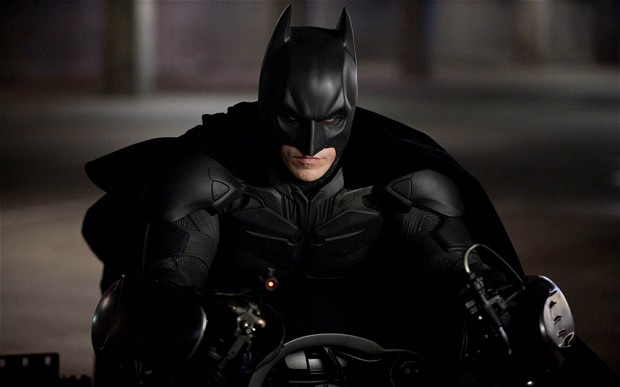
And to care. In all three movies, you care about the characters, and the things that happen to them. When Batman makes his first appearance on the Batpod in The Dark Knight Rises, you’re invested in it (for all kinds of reasons), and that makes it all the more thrilling.

Another example is the way Nolan and his team brought Catwoman to life. Once the Nolans worked out that she should be a femme fatale, a grifter, they wrote the hell out of her part. That commitment extended to the costumes too. They did a particularly brilliant job making the “cat ears” an integrated part of her cat burglar tech gear, which itself is an integral part of her character.

Indeed, from the beginning of the trilogy, one of Nolan’s most original contributions has been to make all the “superhero” stuff utterly grounded, completely explained by function and need. Everything is logical, explainable, rooted in reality. This gives its superhuman behavior much more impact, and increases the coolness quotient exponentially. It’s one of many aspects of Nolan’s version that serves as a masterclass for all genre writers and directors.

The Bat

Of course, when Nolan wants to unleash technological and conceptual hell, he does it with massive style. Especially in IMAX. The first time you see and hear “The Bat” roar into view on an IMAX screen is one of the top ten thrilling moments in cinema history.

Just by way of perspective, so you can see where I’m coming from, my personal number one on that top ten list (and please feel free to add your own suggestions in the comments below) is the first appearance of the T-Rex in Jurassic Park.

T-Rex

On every f**king level — conceptual, visual, primal, emotional, cinematic — it blows you away. The way Nolan handles The Bat falls squarely in this territory. The way he flies it around Gotham’s steel and glass towers also shows us why in some ways The Dark Knight Rises is Nolan’s Blade Runner.

He’s also staked his claim as a true innovator, even though he insists on shooting and editing on film rather than digital. I’m talking about his use of IMAX cameras. Where James Cameron has pioneered 3D, and Peter Jackson is pushing the hyperreality of 48fps, Nolan has single-handedly taken IMAX from the realm of documentaries into the world of the 21st century blockbuster, by shooting ever-increasing numbers of scenes using those cameras. He’s proved that you can shoot drama and action in the format, and use it to enhance the emotional impact of the visuals.

But Nolan’s grasp of the mechanical and technological is just as deft as his way with emotions and dreams. He understands the human heart and all the trouble it can get us into.

He’s a master architect of the human mind, along with his brother Jonah Nolan, who is currently showrunner of the stunningly great NYC-set TV show Person Of Interest. Together, they’ve brought a wholly original point of view to their blend of noir, epic crime, zinging dialogue and startling concepts.

Of course, all this is well and good, but without the cast, the movies couldn’t succeed. Nolan knew this, which was why he cast Christian Bale.
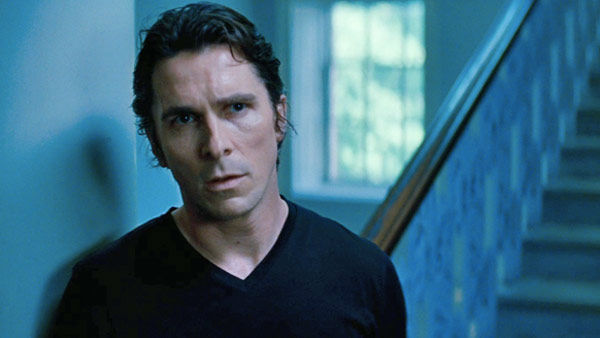
Bruce Wayne

From his start as a young boy lost in WW2 Japan in Steven Spielberg’s excellent Empire Of The Sun, to his Oscar-winning performance in The Fighter, Bale has always delivered maximum intensity and rawness. Whether playing a free spirit succumbing to 60s British suburbia in Metroland, or the burning-out wannabe LAPD cop in Harsh Times, Bale always immerses himself in a part, turns it inside out, becomes it. That transformation burns its way out of the screen.

Who better, then, to play the broken billionaire, tortured by terrible loss, always fearing yet embracing his own inner monsters? In the prior two movies Bale was outstanding, delivering a pyschologically detailed and gripping portrayal of Bruce Wayne. In this movie, he somehow steps it up yet again; this is some of his finest, most heartbreaking, and most ferocious work.

The movie is full of legends and stars: Michael Caine, Gary Oldman, Marion Cotillard, Joseph Gordon-Levitt, Morgan Freeman, and Tom Hardy all invest their scenes with heart and soul.

Oh yeah, and Anne Hathaway as Selina Kyle? Revelatory.

Anne Hathaway as Selina Kyle

In “Catwoman mode,” she’s stylized, deadly, her speech hovering just the right side of a seductive almost-purr, hazy and woozy yet always in control. And in depicting a vulnerable, haunted young woman on the run from an unknown past she fully reveals how Kyle is in the grip of complex moral conflicts. She’s a great female character for a superhero movie, and Nolan shoots her scenes alternating through close-ups, fascinating camera tilts and alluring distance. He shows us her dreams, even as she does her best to hide them.

There’s a great line in Ridley Scott’s Legend: “the dreams of youth are the regrets of maturity.” In some ways, that line resonates powerfully within the world of The Dark Knight Rises; the characters are haunted by dreams, by futures lost. But it also applies to the movie itself. All of us geeks have been fans of superheroes since we were kids. What Nolan has done is turn those dreams of our youth into the extraordinarily thrilling dreams of our maturity.

WILFRED is the INCEPTION of the R-rated half-hour

One of the darkest, most reality-bending, mind-f**king shows on TV right now also happens to be one of the funniest and most raucous half-hour comedies ever made.

FX’s update of the original Australian comedy features the same actor/co-creator, Jason Gann, as the Wilfred of the title: the man in a dog suit that only Elijah Wood can see. Everyone else just sees a normal dog, but for Wood’s perpetually confused and tortured character Ryan, Wilfred is a bong-smoking, toy giraffe-abusing a**hole who likes Matt Damon movies and does everything he can to screw up Ryan’s life.

Jason Gann, Elijah Wood and Fiona Gubelmann

This is a show where the funny is brutal and the darkness is hilarious. And nothing is what it seems. Under exec producer David Zuckerman’s watch, the FX version of the show is like a mash-up of Inception, Awake and The Hangover, all cooked together and smoked in a Californication-style wrapper. But make no mistake, this is an extremely intelligent show. You can’t play with reality to the devilish degree that Wilfred does without being super-smart. And this show does a fantastic job of making sure you feel the same anxiety and confusion that besets Ryan on a daily, if not hourly basis. Just when Ryan thinks he has a handle on which reality is the real one, something else happens to turn that upside down.

It’s a show that seems descended from UK shows such as Green Wing, Spaced and The IT Crowd in that it takes a surrealistically dark and wry look at reality, shifting it around and reshaping it. The difference is that Wilfred takes this so much further, in a highly disciplined way. It really is as if Christopher Nolan was making a half-hour comedy.

For example, the special preview episode Progress features mind-altering medications, different layers of reality, Robin Williams in a classic “bearded Robin Williams” role, Rob Riggle as a potentially hallucinatory work colleague, shock treatment, and Kevin from The Office in a truly multi-layered role. Progress blasts through its surreal and extraordinary story elements in an assured and devious manner, and is a brilliant introduction to the second series.

Jason Gann is even better in this version than the original, and brings new dark slyness to Wilfred in this episode. Elijah Wood’s watery-eyed confusion is as subtle and haunting as always, and Fiona Gubelmann is pitch-perfect as Wilfred’s sweet and lovely and utterly in-the-dark owner.

The writing is sharp, the directing inspired, the drama messed-up, and the humor  bone-dry. Progress is a great start to this second season of a great show. Don’t miss it.