The top 8 rules for writing you can possibly ignore, and the one that you can’t

1) Write like a ninja.

You gotta be able to write anytime, anywhere. No prep, no routine. Just write.

2) Write constantly and always.

On your phone, on napkins, on your hand.

3) Stories are emotional moments.

Whether it lasts a few seconds, or a hundred years.

4) All writing has motion.

Emotion, action, plot, psychology, humor… something must always be evolving.

5) Justify the emotional truth of every scene.

Every scene.

6) Every character needs an emotional POV.

They all think they’re the hero. They all want something. They’re all going somewhere. They’re all thinking their equivalent of “I am Iron Man.”

7) Follow EVERY path in the first draft.

You have no idea what the novel is at the beginning; you only know at the end. So don’t shut down ANYTHING when writing the first draft. Often huge problems that come up later have solutions earlier in the text that you thought were throwaway moments. They weren’t throwaway. You were seeding your solutions.

8) Dream between the lines.

Dream… wander in your mind palace if that’s your bag… worry about the lines, but dream between them too.

…And finally, the big kahuna, the one you must obey above all others:

9) Story is the only rule.

The most important rule of all… the one rule to uh, rule them all: do what’s right for the story.

And do it well.

Bunnies, jumpsuits and clones: TV’s ongoing golden age, 2013 edition

It’s interesting that three of of the greatest seasons of TV in 2013 were all debut shows, two of which came from non-traditional sources.

While Masters Of Sex, a richly nuanced telling of William Masters and Virginia Johnson’s pioneering 1950s sex study, is as burnished and high-quality as you would expect from Showtime, the other two shows came from a DVD rental shop and a cable network not known for original programming. Orange Is The New Black (privileged white girl gets sent to prison for transgressions in her younger life) was a breakout hit for Netflix, while Orphan Black (a twenty-something mother trying to get her child back discovers she has multiple clones) was a phenomenal success for BBC America. They tell very varied stories, but they all share a key quality: an immersive, kinetic, almost urgent sense of emotional turmoil and evolution.

Michael Sheen and Lizzy Caplan

Michael Sheen and Lizzy Caplan

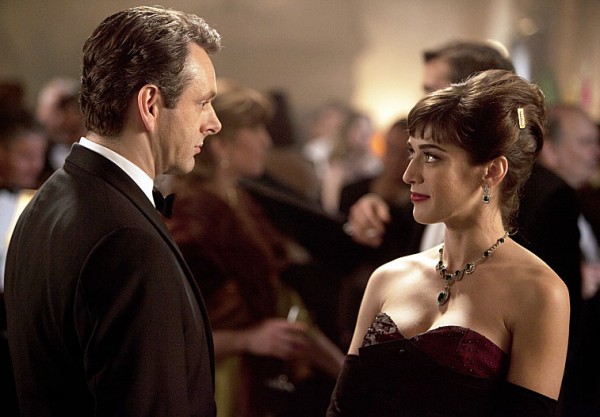
Masters Of Sex, from showrunner Michelle Ashford, has a beautiful, gleaming quality reminiscent of Robert Redford’s Quiz Show. It’s shot and directed in a gloriously low-key yet detailed manner that still finds time to be transcendently visual. Even though it focuses on a groundbreaking study about people having sex, it’s really about the journeys that Masters and Johnson go on, which requires many conversations about methodology, belief systems and statistics. Ashford’s genius is making this an incredibly dynamic and fascinating show, scene after scene, episode after episode. It dives deep into its characters, and elevates their struggles to a mythic level, even as it grounds them in the most fundamental of human needs and desires. Lest that sound too weighty, it’s a very funny show, shot through with a dry, sly wit that emerges not just in dialogue, but also visually (the greatest visual moment of television in 2013 may well have been the sight of a post-coital male rabbit collapsing into sleep the second it, uh, “finishes”).

Coitus not pictured

Coitus not pictured

The writing is always smart, the acting is revelatory across the board, and it all looks amazing.
Taylor Schilling

Taylor Schilling

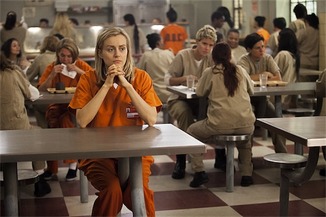
Orange Is The New Black is a deliberately scrappier affair, as befits the chaotic nature of its subject matter. Piper is a WASP-y character who ran wild during her early twenties, carrying out all kinds of illicit and illegal activities at the behest of her girlfriend and lover, Alex. Eventually, Piper gave it all up, and got engaged to NPR-worshipping, brunch-loving Larry. Years later, Piper’s name is given to the authorities, and she is arrested for her crimes, and sent to prison. What follows is Piper’s fraught, emotionally charged journey through prison life. It’s upsetting, terrifying, moving, hilarious and horrifying in equal parts, and never less than utterly gripping. Showrunner Jenji Kohan nails the tone of the show, keeping every episode flying with emotional energy, humor and conflict. It’s a natural fit for Netflix, as it is literally impossible to resist binge-watching this show. The prison is full of vastly different women, all of whom have their own pasts and arcs; it’s a rich and diverse source of stories, all fueled by human beings on the edge, desperate to survive, to make it through, to make it out.

Tatiana Maslany

Tatiana Maslany

Masters Of Sex and Orange Is The New Black deal in realism. Orphan Black, developed by Graeme Manson, has different DNA; it’s a sci-fi thriller with a bleakly beautiful contemporary feel. Very quickly, lead character Sarah Manning discovers that she is not alone; there are young women out there just like her. Not just demographically, but literally: there are identical clones running around and bringing the ruckus (including, notably, a terrifyingly feral assassin clone, although even she is somehow overshadowed by the antics of the soccer mom). The show unfolds its techno-thriller plot with the verve and emotion of Fringe, and the relentless grip of Homeland. The conspiracy widens and the truth evolves. These fantastical elements are grounded in some jaw-dropping performances. The two leads, Felix (played by Dylan Bruce) and Sarah (played by Tatiana Maslany) are originally from Brixton, in the south of London. This is one of the most specific British accents there is; Bruce and Maslany are both Canadian, but both deliver flawlessly authentic and thrillingly naturalistic performances. But it doesn’t stop there, because Maslany also plays the clones, all of whom are wildly different, in character and mannerisms. It’s an acting showcase and masterclass that weaves breathlessly around the ferociously unfolding plot. It’s highly engaging, and never lets up for a second.

Three brilliant seasons, three brilliant shows.

There were many other great seasons of TV in 2013 too: Almost Human, The Walking Dead, Person Of Interest, Arrow, Nashville, The Tomorrow People, The Blacklist, Shameless, Game Of Thrones (which delivered the year’s most talked about episode of TV, the Rains of Castamere), Homeland (which seemed to nosedive for three episodes before revealing that it was in fact its most ruthlessly brilliant season yet),  as well as the UK hit The Wrong Mans, a brilliantly off-kilter and kinetic “action sitcom” about being an ordinary man caught up in a Bourne-style conspiracy.

Special shout out: the fifth and final season of SouthLAnd, one of the greatest TV dramas of all time, which inexplicably received the worst DVD handling of any TV show in history (barely getting a release, appearing as “DVD on demand”, then bundling odd groups of seasons of the show together, never once releasing a prestige blu ray set, even getting its theme music replaced on some DVDs and digital downloads). The lack of options undoubtedly held back its ratings (binge-watching catch-ups are a key part of keeping shows alive in later seasons), and although the show ended on a typically intense and emotional high, it’s a shame it isn’t easier for fans or newbies to own it in a quality format.

All these shows featured compelling characters, gripping emotional journeys, killer banter, and dynamic pacing. TV is going through a continuing golden age that only seems to deepen as shows start emerging from unexpected venues. There are more channels greenlighting more shows year-round, instead of the usual handful during the more typical pilot season. Now fantastic shows are constantly springing up and demanding great acting and writing talent. It’s an astonishingly fertile, lively, beautiful time for television drama. It’s hell on my DVR and my writing schedule.

Long may it continue.
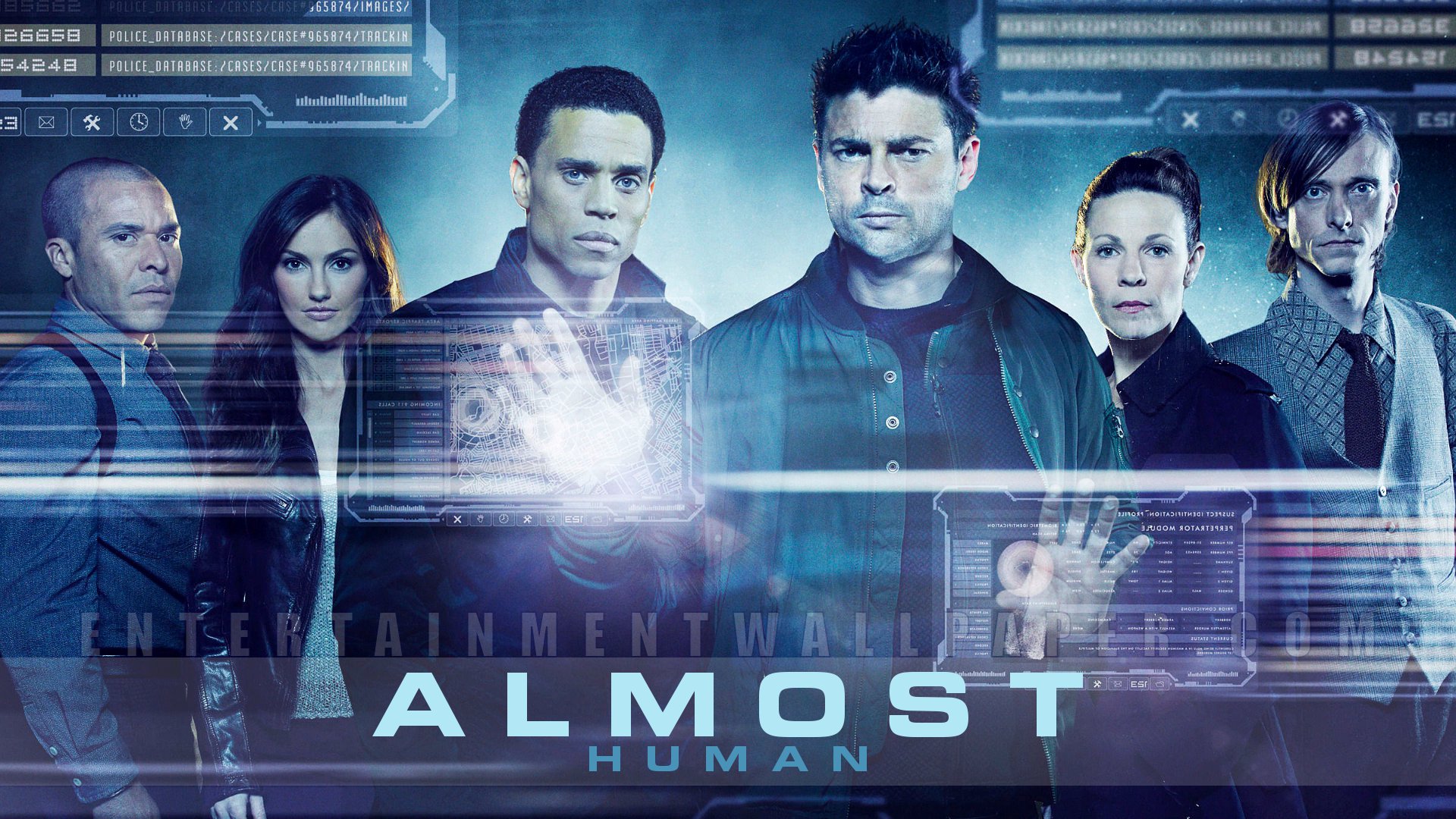
Almost Human: under the Skin

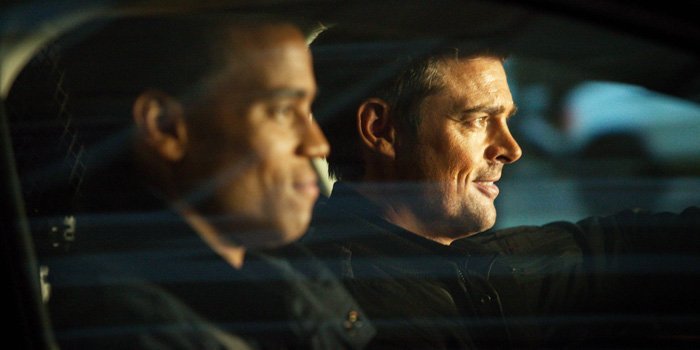
It can be tough for a new show to maintain momentum in its second outing. Fortunately for Almost Human, episode two (“Skin”) featured a Cheo Coker script about sexbots. This was basically the exact opposite of a Kobayashi Maru scenario.

Coker has perfected the art of yielding deep character revelations from the smallest of moments (on SouthLAnd), and the skill of wielding heavy exposition on the fly (on NCIS:LA). These abilities are essential in the future world of Almost Human, which has a network procedural chassis powered by a cable-style character-based engine. The words were the supple human skin on this artificial life form: the hour was full of emotional, wry, hard-hitting and rhythmic dialogue. With a steady stream of killer details (cats, balls), Kennex and Dorian bantered like pros. Karl Urban and Michael Ealy played their scenes to perfection, continuing an endearing chemistry that makes us want to spend the entire hour listening to them ragging on each other.

Almost Human Skin

Both actors can convey emotional nuance with the smallest of actions, which fits the style of this show perfectly; it’s a gritty, flinty, fast-moving world, composed of shards of light and emotion amongst the steel and glass. Cityscapes glitter and shine brightly with future-light, androids behave as though they have souls, and no one is quite what they seem. The hard-bitten noir quality runs through every aspect of Almost Human, as does the connection with Blade Runner, which is not just there in the concept and visuals, but also in the dialogue, with a character at one point talking about a blush response. Of course, the key debate of that movie was whether Deckard was a replicant. It’s a rich seam to mine, and J.H. Wyman’s show is doing it thoughtfully.

At the same time, it’s distinguishing itself from its sci-fi forefathers and brethren, establishing its own unique identity through a new language of crime: flash masks, DNA bombs, tag scramblers. Wyman is delivering on his promise to only feature crimes that are entirely dependent on futuristic technology. This is a sci-fi geek’s dream in the best kind of way. The concepts are clever, but the emotions are always real: Dorian’s pain at the destruction of another synthetic was palpable and moving.

And yet, in a sign that this show has a great line-up in the writers room, possibly the most moving moment of the episode was the tiny robotic giraffe that Kennex hands to the small child of a kidnapping victim. That emotional moments can be handled so quietly and simply amidst the chaos of the day bodes extremely well for the sophisticated nature of future episodes.

All of the show’s emotions are enhanced by The Crystal Method’s beautiful, futuristic and ambient score, which flows through every scene artfully; it’s up there with the best sci-fi scores, in TV and in film. If machines did dream, this is what it would sound like.

Almost Human has started with an astonishingly assured one-two punch. It’s thrilling TV; exhilarating concepts driven by emotional truths. As long as it can give more time and complexity to Captain Maldonado and Agent Stahl, both of whom currently exist in a “popping in and out of scenes with information” status, there’s nothing to stop this show cementing its status as best new drama of the season.

Random uploads:

  • “You scanned my balls.”
  • Gareth from The Office (the UK original) as a specialist in robots. Brilliant.
  • Kennex stabbing his leg and scaring the kids.
  • That giraffe, man. Beautiful.

Almost Human: Pilot Episode

That Fringe-shaped hole in your TV world is about to be more than filled with ALMOST HUMAN, a show that might just be the purest display of high-octane sci-fi ever to hit the small screen.

The pilot episode, penned by former FRINGE showrunner J.H. Wyman and produced by sci-fi uber-titan J.J. Abrams (FRINGE, PERSON OF INTEREST, REVOLUTION, SUPER 8, STAR TREK, STAR WARS), is a fiercely gritty introduction to the police procedural world in 2048. Cops are partnered with androids, and programmable DNA is the target of choice for the future-tech criminals they chase down.

Almost Human

The pilot accomplishes more than most first seasons. Wyman’s world-building is precise, deep and always on the fly. It’s a world of constant motion. This is kinetic sci-fi of the highest order. And it’s all driven by character and emotion, memory and loss; every piece of tech, every cool idea, is serving the story. Wyman’s great skill is to introduce us to multiple strata of the world, as well as our two lead characters: Kennex, the embittered cop struggling with the continued fallout of a mission gone wrong, and his partner Dorian, a “synthetic” who is programmed to feel. They both have something to prove, and almost certainly something to hide.

Their relationship is the cornerstone of the show; it all depends on their arcs, their dialogue, their chemistry. Wyman’s script does a stellar job making all this completely naturalistic, and the two actors, a fantastically grizzled Karl Urban and a smoothly assertive Michael Ealy, trade hard-bitten noir-ish lines with ease.

That combination of sci-fi noir and androids programmed to seem human unavoidably calls to mind the ur-text of this genre: BLADE RUNNER. To its extreme credit, ALMOST HUMAN is never derivative, but doesn’t shy away from the resonances either. Indeed, it richly plays with our expectations by giving us just enough to wonder if Kennex is as human as he seems (read EW’s excellent breakdown of this theory).

The sci-fi in the show serves the story entirely; and simultaneously the story couldn’t exist without the tech that drives it. That’s why this is pure sci-fi, the very best kind: emotion, action, concept, heart and character are all the same here.

It’s an outstanding pilot episode, one that holds a tremendous amount of promise for the rest of the season.

IRON MAN 3: You’ll nevverrr seee itttt comminnggggg

The first of the summer 2013 blockbusters, Iron Man 3 gets the season off to a tremendously invigorating start. With a cracking script co-written by the creator of the highly sarcastic, superhero-deconstructing Brit TV show No Heroics, Drew Pearce, and genre king Shane Black, who also directs, this is a big, beautiful blast of pop culture awesomeness. That it just happens to handily redefine the superhero movie along the way is just an added bonus.

Spoilers

Spoilers

As many have pointed out, this looked like it was going to be something of an Iron Man Into Darkness kind of sequel, with all those previews of Tony talking about his nightmares, and getting his ass kicked. As it turns out, the movie is much more fun than those trailers would have had you believe. And the way it flips EVERYTHING on its head halfway through is fantastic, a scene of such staggering disbelief that you almost can’t take it in as you’re watching it. It’s a genius move from the writers. A twist that changes the movie, and the genre, that’s somehow also completely hilarious and brilliant. That, along with the live-wire one-liners that electrify pretty much every scene (with trademark Shane Black inclusivity, everyone from Tony to bit-part henchmen who only appear in one scene get great dialogue), make this a non-stop, old-school thrill ride.

It’s that combination of old-school banter, new-school psychological deconstruction (wait, come back!), and particularly post-postmodern meaningful twistiness and playful sincerity that formed the filmmakers’ answer to the big, giant, frankly terrifying question that loomed before them like Thanos himself: how the HELL do you follow The Avengers?

Bringing together the dry, wry British comedy stylings of Pearce with the 80s-soaked action/banter genius of Black was the beginning of the journey. They are the twin strands of Iron Man 3‘s ludicrously entertaining DNA. Its soul (we’re just going to proceed with some good old fashioned Cartesian duality here, m’kay?) is Robert Downey Jr. Because Black & Pearce can write the hell of out Tony Stark’s dialogue, but it’s Downey Jr that whips those words off the screen with the ultimate in nonchalant panache. Downey Jr IS Iron Man, to be honest. He’s the fortunate beneficiary of one of the strongest Marvel scripts yet, which gifts him with continued emotional complexity, and some stunningly inappropriate and therefore wonderful zingers.

He’s surrounded by extraordinary talent: Gandhi, Mike from Neighbors, the creator of GOOP… I mean it though: Ben Kingsley, Guy Pearce, Gwyneth Paltrow, Rebecca Hall, Don Cheadle, Jon Favreau… It’s a brilliantly deep bench of talent which, along with Black’s utter assurance as a director, keeps this movie moving, and ensures that it’s always robust.

From the big set pieces (the attack on Tony’s mansion, the climactic mega-battle), to the smallest of moments (Tony’s rapport with and utter condescension to his little sidekick;  Favreau’s running Downton Abbey gag), this movie will put a big, silly grin on your face. And, if you’re especially geeky, the closing credit sequence, which is a very 80s style recap of all three movies to date, will make that grin even bigger. Such is the genius of this movie that even its post credit sequence is simultaneously a funny throwaway moment, and also the key to the entire film.

Mac and C.H.E.E.S.E., the reboot

Mac and C.H.E.E.S.E., the reboot

The only downside is the somewhat under-cooked nature of the female roles: it’s particularly disappointing to see Pepper Potts reduced to a screaming, Fay Wray-style helpless woman in distress, especially since she was so sharp and impactful in Joss Whedon’s take on her. But few are as great as Whedon at gifting women with incredible roles in movies and TV. Still, a little more oomph in her character here would have gone a long way. Hall isn’t bad, but she is more of a catalyst than a protagonist. For someone of her talents, that’s a shame.

That aside, this is a brilliant movie, which is relentlessly entertaining, and a highly worthy follow-up to the most successful superhero movie of all time. It’s the only move Marvel could have made; just another indicator of how smart Marvel has been in building this cinematic universe.

4 out of 5 Iron Men Suits