SouthLAnd: Taking the Heat

The greatest SouthLAnd writers have distinctive styles and voices.

This week’s writer, Heather Zuhlke, excels at texture; the connective tissue between characters, between scenes, between themes. She can give you all you need to know about a person, a relationship, a situation, with just a few careful words and moments.

That skill with texture was key to Heat, as this episode was all about interactions; the webs that link one person to another, and how those bonds hold up when the heat, the pressure, is cranked all the way up. Those brief, fragmentary moments were even more important than usual in a show that thrives on an aggressively existential insistence on the importance of the present moment, and the irrelevance of the past and the future.

Whether it was Cooper and the girl who brought him muffins, or Cooper and Steele, or Cooper and the veteran, or Sherman, continuing his alienating trend of being a total dick to everyone except the people who would actually deserve it, or Bryant, desperate to connect with his own son, and instead connecting with the dying son of a gangster via a toy Lego cop — each situation was short, brutal, and revelatory, thanks to Zuhlke’s absolute mastery of character through action. It sounds obvious, since that is the goal of TV drama (of all drama, all writing) — but it’s not. It’s hard to get right even some of the time — Zuhlke nailed every single beat from start to finish.

The acting in this episode was exemplary. As you can tell from the list above, Cudlitz had a lot to do, and he did it brilliantly. Ben McKenzie is fearless this season, utterly willing to throw off Sherman’s idealistic former self in favor of his transition to a hardened, jaded douchebag. Hatosy is great as always, keeping Bryant’s combustibility in check, but only just. He effortlessly conveys the fact that Bryant has much more experience, and is likely a much better cop, than Sherman.

I haven’t mentioned Regina King yet, because she deserves special focus for this episode, which was really all about Lydia’s much welcome return to being an awesomely powerful powerhouse of a woman. From the opening flashback when we see her start to kick the ass of a kickboxer in a street brawl, to her first shot doing insane pushups, through her beautifully depicted banter with Dorian Missick, King owned this episode. She’s a natural match for Zuhlke’s style, able to convey extraordinary amounts of emotional information with the barest of words or gestures. Her joy at her comeback made the ending all the more devastating.

A quick word about that. SouthLAnd excels at dropping you into unknown trouble and making you feel it, instantaneously — the moment contains all you need to know for it to f**k you up emotionally. Earlier in the episode, the show made a rare minor misstep with Mendoza’s story. It could have been the character being too new and unfamiliar, it could have been that we don’t connect with Sherman’s loyalty to him, or it could just be the precise sleaziness of the performance. Whatever the reason, there were only two moments in the arc that truly worked: Sammy gaving the Lego cop to the dying kid (at which point it started raining on my face for some reason), and the very end of the arc, when Sherman is left alone in the hospital corridor — utter isolation that definitely hit home. Those moments aside, that story just didn’t have the emotional power to jump start our feelings.

The same cannot be said for the ending, which was horribly savage in the quietest of ways. Classic SouthLAnd. We didn’t even know what was truly happening. We didn’t need to. Regina King’s heartbreak was backed up by everything that had happened to her earlier arriving in that scene like an emotional freight train — that’s brilliant writing. The moment was flawlessly conveyed, and the previous 40 minutes slammed into you while you were down. King is an extraordinary actress, and why she doesn’t have a truckload of Emmys at this point is beyond me.

The texture that was key to this week’s script was also there in Dana Gonzales’s lighting. While Jimmy Muro is the undisputed master of capturing that Los Angeles light, Gonzales has been quietly excelling in a number of SouthLAnd episodes (most notably, God’s Work). He can harness extraordinary early morning golden hazes (he shot the golf course like an alien planet shrouded in sentient light), and he can wrestle lens flares out of literally any shot — the patrol officer’s badge when Lydia and Ruben walked up the hill to their first case, or the patrol car lights on a cloudy day after Cooper was shot at. Gonzales is a legendary DP.

Heat continued the season five trend of being tighter, more compact. Sometimes, that constricted the emotional responses a little; mostly, it accentuated them. It’s simply the rawest, most real show on TV right now. Challenging, uncompromising, and brilliant.
SouthLAnd Season 5: Hats And Bats

We hold cops to a higher standard because we give them a gun and a badge.

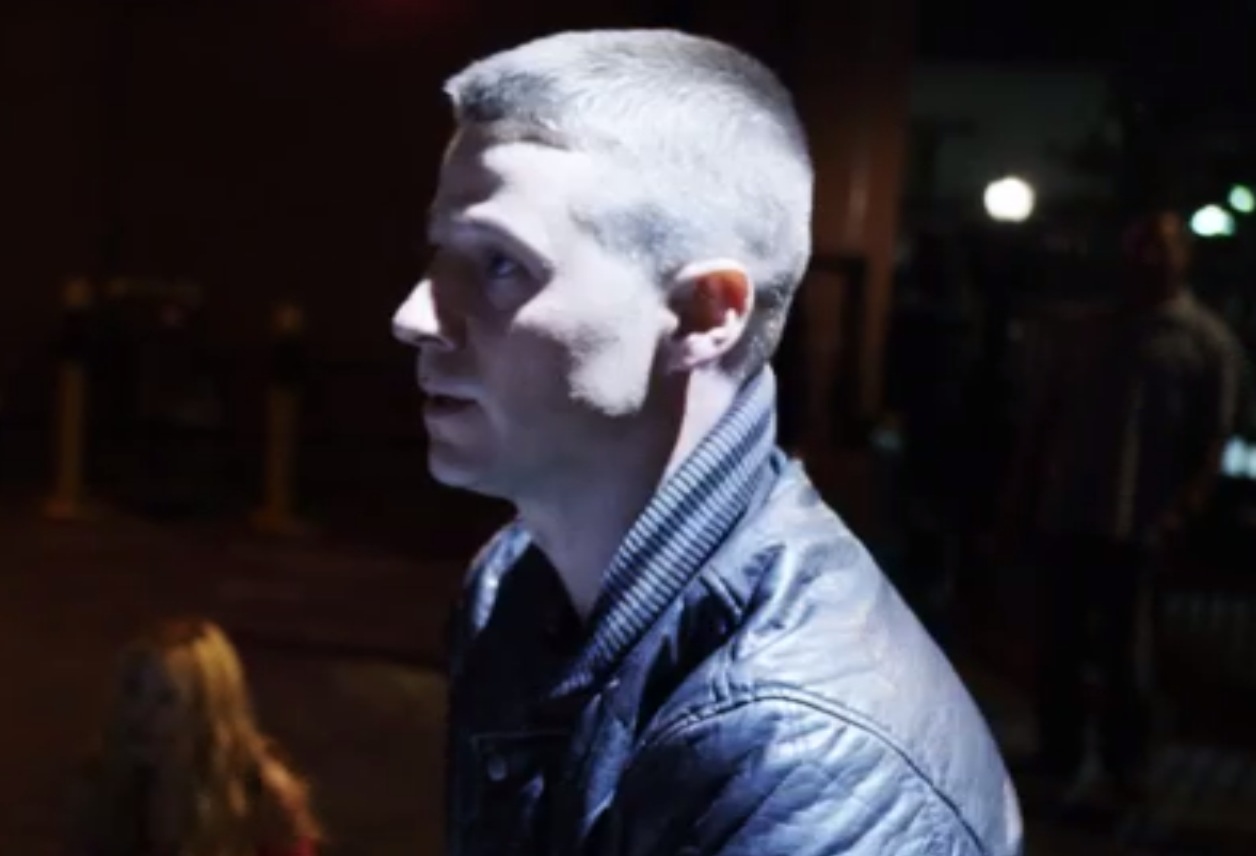
Officer Ben Sherman, facing stark realities

Officer Ben Sherman, facing stark realities

Only problem with that is, we recruit them from the human race.

With that opening voiceover and freezeframe, SouthLAnd started its fifth season by dropping us into hell without a parachute. Each season gets tighter, hits harder, jabs more lethally and precisely, knocks you down with even more viscerality. Hats And Bats continued this tradition with blade-sharpened verve and ferociousness, while, as always, somehow finding time to inject genuinely heartbreaking emotion. It brings you to your knees, then breaks your heart.

This episode was written by the exemplary Jonathan Lisco, directed by the legendary Chris Chulack, and lit by lighting genius and maestro Jimmy Muro. Lisco’s scripts always carry his signature: an extraordinary sense of intelligence and precision, whether he’s serving up something shocking, hardcore emotional, funny, or just general truths about humanity. It sounds casual when it’s written out in a list like that: but there’s nothing casual about it. It takes hard work and skill to pull off. Lisco delivers all those things in elegant scripts that just flow. There’s always a powerful core of great character work that keeps the script rolling; all those other elements are subtly intergated on the fly. Which just happens to be the definition of great writing.

For example, the scene in the swimming pool/bath house: utterly horrific, over so quickly we never know what was going on – but it’s a complex, almost wordless character moment for Sherman and Bryant. Then, later in the episode, their scene dealing with the old lady whose sister was murdered (which included a nice shout out to writer/supervising producer Cheo Coker, who moved from SouthLAnd to NCIS: LA), was another example of the scene getting in, getting out, but slamming you with serious emotions on the way. And Lisco was also responsible for one of the funniest lines of the show in all five seasons:

Jerry: “We have a permit.”

Cooper: “To be a dipshit?”

Of course, Chulack  and Muro killed it. Of course they did. They shot and lit it with brutal, pared-down style, keeping the camera close and low to the ground. It was the kind of lighting and directing that almost stripped itself away, making you feel as though you were immersed in nothing other than the rawest of truths in every beat, every scene.

Which brings us to the acting.

Damn.

This may be the finest ensemble in TV right now.

Ben McKenzie and Shawn Hatosy nailed the fractious, buddy/brotherly relationship between Sherman and Bryant. McKenzie portrayed Sherman’s unease at his newest level of celebrity, while Hatosy was utterly compelling as a father under huge pressure, dealing with a crazy ex-wife, barely controlling his rage from boiling over. Lisco’s script had Sherman and Bryant butting heads, cracking jokes, having each other’s backs, and McKenzie and Hatosy handled every single beat with extreme presence, energy and truth. Regina King showed us a mother barely holding it together as she dealt with the immense stress of being a single mom, as well as the immense stress of being a detective; King was incredible, as she always is.

And then there was Cudlitz.

He gave us an astonishing spectrum of emotions in this episode. Lisco gave him great material to work with — having to be even more hard-ass than usual with his newest boot, an ex-military powerhouse with attitude to spare — as well as peeling back the layers to show the lonely soul beneath the surface who just craves companionship, and, maybe, even though he’d never admit it, love. Brilliant work from Cudlitz from start to finish.

Dewey. Yep.

Tommy Howell is a legend, and it’s great to see him promoted from recurring to regular.

On every level, this really is a show that grabs you and doesn’t let you go. It makes you feel like it just threw you off a balcony. There’s a vertiginous sense of falling that pulses through this show — that dread is part of its power, because anything can happen at any time.

All in all, this was a truly fantastic start to what promises to be an amazing fifth season for SouthLAnd. It’s a show that just keeps on getting better, season after season. That’s a rarity in TV drama. This show really is one of a kind; can’t say thank you to TNT enough for believing in it too.

Random witness statements:

  • Few things are more pleasing at this point than hearing”hey numbnuts!”
  • Jeez, Sherman — Sammy just really wants to clean up some blood this episode, okay?
  • Coker
  • “Welcome to the info age. Instant riots — just add tweets.”
  • So much screaming in this episode
  • Bryant on Sherman’s new haircut: “They remaking Taxi Driver?”

ARROW: Deadly Precision

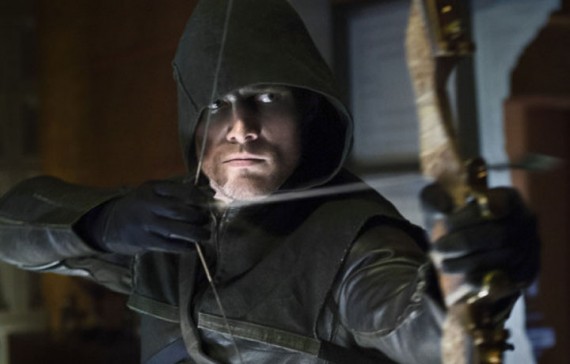
Yeah, I know, my title sounds like a Steven Seagal movie. But trust me. If you’re not watching The CW’s new show Arrow, you should be.

The Hooded Vigilante

The Hooded Vigilante

Adapted from DC’s Green Arrow source material, Arrow takes those classic pulpy comic elements and brilliantly locks them into blisteringly precise action, gritty atmosphere, edgy storylines, and CW-style relationship drama. This is a high velocity show that relishes its comic book origins even as it transcends them.

Also, it has John Barrowman.

Exec producers Greg Berlanti, Marc Guggenheim and Andrew Kreisberg have crafted a gloriously entertaining, moves-like-a-bullet (or should that be arrow?) narrative that revels in its darkly wrought drama, and isn’t afraid to have an incredibly stylized blast.

As the show’s star, Stephen Amell, often tweets… thwick.

Better than Katniss

Better than Katniss

The set-up is this: billionaire playboy Oliver Queen is lost at sea when the yacht he’s on with his girlfriend’s sister, and his father, disappears during a storm. Five years later, out of nowhere, he reappears and returns to his home in Starling City.

But he’s not the same.

The show deftly blends flashbacks to the devastating accident, the aftermath, and the mysterious island on which Oliver was stranded for those five years. These scenes are interpersed with his present day reality: spreading fear and justice as Starling City’s bow-and-arrow-wielding hooded vigilante. He’s cleaning up the streets, following the plan set out for him by his father, who gave him a notebook full of names: those who deserved justice. The show has morphed satisfyingly quickly from attack-of-the-week into deeper, more challenging and dimensional territory, as conspiracies unfurl, and complex relationships become more apparent.

Laurel Lance (Katie Cassidy) and Oliver Queen (Stephen Amell)

Laurel Lance (Katie Cassidy) and Oliver Queen (Stephen Amell)

Berlanti, Guggenheim and Kreisberg, like a team of superhero lawyers, have a killer eye for hiring directors, including the always legendary Guy Norman Bee (also known for directing Supernatural, SouthLAnd and Revolution). The action is blistering and razor-sharp; the shooting, lighting and editing is hyper-stylized, hyper-real, full of comic book angles, stark shadows, and blinding light.

But it’s all rooted in the characters.

Oliver Queen, the dilletante turned superhero, played with Tom Cruise-like movie star presence by Amell. Laurel Lance, an idealistic lawyer and Queen’s ex, the girl he betrayed by sleeping with her sister, leading to the sister’s horrible death, is perfectly played with soulful, sly sensuality and sharp-edged grief by Katie Cassidy. Queen’s sidekick John Diggle is given gravitas and no-nonsense attitude by David Ramsey. Queen’s sister Thea is played to perfection by Willa Holland, who nails the complex emotions that drive that character. Colin Donnell does a great job as Queen’s beleaguered best friend Tommy. And the mysterious Huntress, AKA Helena Bertinelli, who is played with tormented, broken-hearted angst by the superb Jessica De Gouw.

Oliver and Helena, AKA, The Huntress

Oliver and Helena, AKA, The Huntress

These actors are all brilliant; luckily, the scripts are equally  fantastic, thanks to the powerhouse writers room. The scripts are punchy, sharp, shot through with snark, easily balancing the past and the present, emotions and thrills, complexity and the simple pleasure of watching the vigilante deliver expertly choreographed smackdowns.

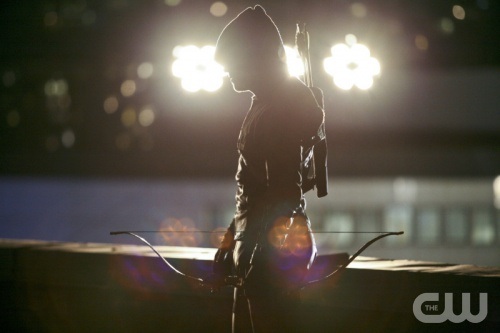
The Hooded Man

The Hooded Man

In short, this show is tremendously entertaining. Off the charts. A high octane blend off pop culture awesomeness.

Watch it.

“Your kung fu is strong, and your magic is powerful…” NCIS: LA, Cheo Coker-style

Watching Collateral, Cheo Coker’s first episode for NCIS: LA, is an inspiring experience.

His former show, SouthLAnd, was all about character, and only about the plot and the crimes when it related to character. SouthLAnd has never been about solving the crime; it’s about understanding the character. Whereas, NCIS: LA is a plot juggernaut, a procedural freight train that requires its characters to deliver high volumes of exposition as its multi-layered crimes are uncovered. Coker has proved himself the master of deep character revelation through minimalist and fiery dialogue; what would he do with a show that demands huge blocks of time devoted to the procedural details?

Turns out, a tremendous amount.

Writers of TV scripts, movie scripts… hell, whatever kind of writer you are, Coker’s episode contained some invaluable lessons.

1. Character.

In a heavy procedural like this, the majority of the 42 minutes running time is taken up with blocks of discovery, exposition and payoff. That’s the point of the show, and NCIS: LA delivers that with style. What Coker did was fill those brief interludes between procedural necessities with a furious flurry of character-revealing dialogue and banter. He added depth and soul, where many shows would settle for “we’re here, and now we need to go… there.” His riffs on LPs and cartoons allowed him to create a fast-moving, warm dynamic between Callen, Nate, Nell and Hanna. The lesson: every moment, every line and beat and reaction, is a chance to deepen your characters and their relationships. Don’t waste a second of your screenplay. 

Taking every opportunity to deepen relationships

2. Seriously, Character.

But Coker didn’t stop there. Even during the more mechanical components of the plot, he was reflecting character, taking each opportunity to shine a light into the team, showing us what makes them tick, what makes them work well together. For example, even a quick comment about grandstanding partners (along with the reactions in the room) added to what we know about the team and how they feel about each other. The lesson: exposition can be a bitch — so make it fun, vivid, naturalistic… and make it reveal something about your characters as well as the story. The facts of the case are best served up while they are also telling us more about the speaker and the listeners. If your plot point is also a character point, you’re winning.

Exposition alert! Coker makes scenes like this just pop

3. Pop Culture.

Damn. Coker is the true master of the pop culture riff. No one is doing it like him. He emptied clip after clip of pop culture into his SouthLAnd scripts (“Where’s Optimus Prime when you need him?”, riffing on James Ellroy, or Sonny Chiba), and he stepped up again in Collateral, firing off ongoing bits about Hong Kong Phooey vs. Underdog, Isaac Hayes and vinyl LPs vs MP3s, James Bond blu ray box sets, video games… the list goes on. The lesson: keep things LIVELY. It doesn’t have to be via pop culture — that’s hard to pull off naturalistically unless you have a genuine love of and feel for your references — it can be via snark too — but keep the dialogue cracking, multi-dimensional and, above all, revealing. It’s a blast when characters face off about pop culture in the middle of a crisis (a great example of this is Quentin Tarantino’s “silver surfer” rewrites in Tony Scott’s Crimson Tide). It’s also a blast if your characters can talk in snark-tightened one-liners, even as they are discussing plot. Make each line do at least two things. Bring the swagger.

Swagger just out of shot

NCIS: LA is a cool show, with a quick-moving format that can handle cases that broaden their scope as the investigation progresses. Coker’s script was an exceptional example of how to accomplish procedural heavy lifting and character/relationship revelation on the fly, while having an awesome time doing it.

If you can tell stories like that, your viewers/readers will stay with you to the end.  

Homeland: Changing The Game

I can’t believe it’s taken me all of season one and five episodes into season two to write about Showtime’s adrenaline ride Homeland, a show that can only be described as the greatest drama on television. It’s up there with SouthLAnd, but in a different way. SouthLAnd is resolutely anti-plot, existing intensely, almost existentially in the moment, while Homeland is the absolute pinnacle of tightly-plotted, brutally ratcheted series-spanning conflicts and tensions. Where they meet is in their equally brilliant treatment of character; the brutal paring back of psychological layers, the unflinching dismantling of everything their characters believe.

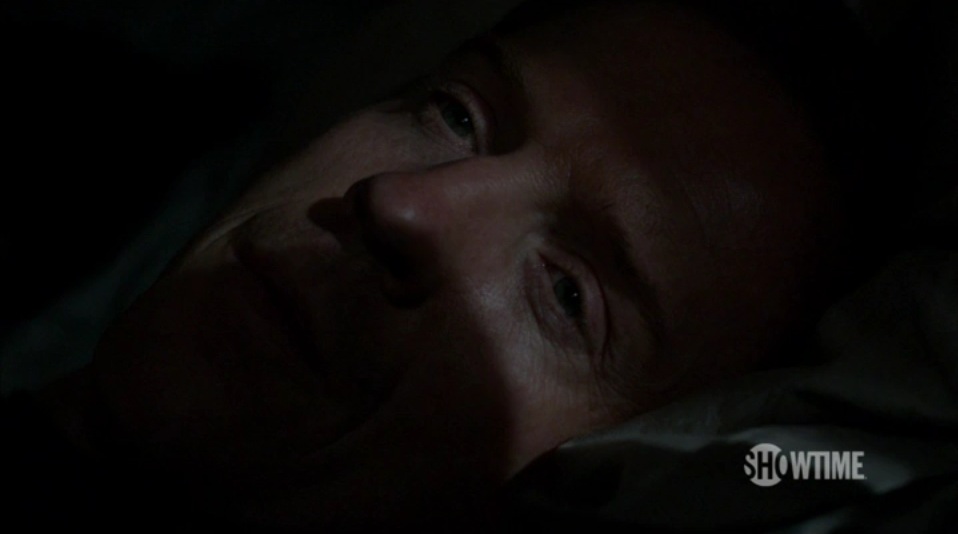
Everything in shadow… Damien Lewis as Brody

Homeland really does have it all. Gut-wrenching tension and reversals, compellingly real characters who wear their complexities and contradictions lightly and naturally, an insanely suspenseful master plot that is apparently constructed from a thousand insanely suspenseful moments that have you on the edge of your sofa, on your feet, shouting at your TV, and watching it over again to make sure that DID just happen. The writers of this show are obviously masters of furiously fast pacing, throwing down HUGE story revelations and dropping massive story bombs in the earliest episodes – already, in just five episodes of season two, we’ve had at least three monumental GAME CHANGING scenes, any of which would be another series’ season finale (or even series finale). But the writers of Homeland have almost casually taken us to these extreme places, with SEVEN episodes still remaining. This is how you know: they must have some extreme shit planned for the rest of the season. And they’ve shown us we can trust them. Trust is key to long running dramas: are the writers just bullshitting their way through, or do they have a plan? The Homeland writers have the tightest grip on their story, from the “in the moment” beats, to the arc of each season. The beats, scenes and episodes of this show are solid and interlock tightly. There are no gaps, no wobble in the construction. Just a series of emotionally and cerebrally detonating storylines that power through an ever-escalating sense of suspense.

As writer Alexander Cary has said, “if we have a good story idea, we go there, and we don’t delay it, we don’t bank it. We write ourselves into corners.” The way they write themselves out of those corners is always exhilarating; high-wire writing, executed perfectly, every time.

Anything can happen… Claire Danes as Carrie Mathison

This writers room, led by 24‘s Alex Gansa and Howard Gordon, gives us everything.

There are small, breathless character moments (Dana and Finn in the Washington Monument, their reflected faces held suspended in the dark glass above the glittering city lights); bad-ass moments of all kinds (“The Smile,” the snarky banter between Carrie and new analyst Peter Quinn, Saul’s gruff awesomeness, terrifying chase scenes); gripping psychological arcs; deep wells of emotion; characters pushed to their absolute limits; and, of course, THAT PLOT… that vertigo-inducing sense of WHAT THE HELL CAN THEY POSSIBLY DO NEXT?!

The nature of threat: any scene can explode at any time. Rupert Friend as Peter Quinn.

In Homeland, character revelations and plot vertigo moments happen at the exact same time; plot and character are the same thing in this show. The interrogation scene in episode five, where Carrie and Brody are both utterly raw, her with love, him with the collapse of everything in his world, is one such example: it’s staggeringly riveting, finely-detailed, deeply soulful, and, in its most extreme, extraordinary, series-changing, character-revealing moment, utterly quiet and low-key. One simple word after the LONGEST pause in TV history changed the game. AGAIN.

The loudest of truths in the quietest of moments

That’s something I love, and it has changed the shape of my own writing. You can’t truly love something without it changing you. This is definitely one of the joys of being a writer: when other writers show you amazing possibilities and just make you want to get back to the laptop and write something new, something better. This beautiful hybrid of powerful, engaging character work and OMG WHAT HAPPENS NEXT plotting is something I was aiming for with ALTERED; and, now I’m writing book two of that series, I’ve essentially got a sticker above my desk that reads WWTWOHD (What Would The Writers Of Homeland Do… not exactly catchy, but damned effective). It’s a show that any writer of any kind can learn from – and should learn from. It’s an extraordinary example of brilliant storytelling.