We Have A Hulk: How The Avengers Took Over The World

Wow.

I mean… Wow.

Whether you were a total Whedonite, or just a Buffy or Firefly fan, or someone who knew he did that vampire thing but didn’t know about the comic books or web shows, or you just weren’t a fan of Joss Whedon at all, it was impossible not to kneel before The Avengers as though it was an all-powerful demigod demanding your allegiance. In a good way.

Kneel!

What a remarkable achievement this movie was on each and every level. Never before has a franchise been born character by character before being pulled together into one massive, all-conquering whole. For that we can thank the unswerving vision of Marvel Studio’s head honcho, Kevin Feige. From 2008 through 2011, he shepherded Iron Man 1 & 2, Thor and Captain America into production, setting up the title characters, and weaving in Samuel L. Jackson as Nick Fury, Clark Gregg as Agent Coulson, Jeremy Renner as Hawkeye, and Scarlett Johansson as Black Widow. Each movie not only set up its lead, but also evolved the Avenger Initiative backstory a little more, through one-liners, brief glimpses of the S.H.I.E.L.D. world, and crafty post-credits stingers.

With that heavy lifting taken care of, the biggest task still remained: how to take all those characters and synthesize them into one fast-moving, massive spectacle of an event movie, while retaining the humor, soul and smarts of each of the previous installments.

Which is where Joss Whedon came in.

Joss Whedon directing Mark Ruffalo

It’s no easy thing, to keep so many characters in the mix, giving each their moment(s) to shine, without losing any of them — this is especially true when the characters in question are iconic; are all (or have the potential to be) stars of their own movies & franchises. At least, it’s usually no easy thing in the movies. In TV, on the other hand, keeping multiple character arcs rolling and interweaving as you escalate stakes and understanding is simply business as usual. Todd VanDerWerff made this point in a brilliant piece for the Onion’s AV Club. He talked about how J.J. Abrams, another TV superstar-turned-movie-god, also had the same intuitive understanding as Whedon: focusing on the good guys and their interactions and emotional connections is a powerful foundation, especially in a huge movie. There are exceptions, of course, most notably Christopher Nolan’s Batman movies, which are dark and extraordinarily focused odes to isolation and loneliness (also, they’re works of utter genius). However, in the case of The Avengers, which is a high-energy, brightly-colored rock-n-roll universe, focusing on our heroes was a brilliant move on Whedon’s part.

Everyone got arcs and awesome moments (although Robert Downey Jr may have had a few more than most, knocking them all out of the park). Whedon found a way to humanize each of his heroes (most poignantly using “the cellist” and the trading cards to make us care about Agent Coulson), which drew us in all the more: such care is rarely taken in tentpole pictures, and even when care is taken, it’s rarely done with such skill and charm.

The script really is a force to be reckoned with; this is writing as superpower. It begins with a boom, then rides that momentum easily as it swoops from character to character, using one to segue to another, never losing pace as it builds up the cast; then it ratchets up the stakes, the conflict, the sheer size of everything — bringing the team together then breaking them down then finding a nuanced yet brutal emotional lever to launch the massive, rollicking final third of the movie.

This juggernaut of narrative pace is shot through with constant soul, emotion, and, most importantly of all, a relentless and brilliant sense of razor-sharp wit. This may just be the greatest comedy of the year, even as it lays an early claim to blockbuster movie of the year, and possibly even highest grossing movie ever made.

Whedon brought other great grace notes to his performance as writer & director, flourishes that made the performance even more his own: casting the iconic rebel Harry Dean Stanton as a janitor (to Hulk: “son, you have a condition”); using Lou Ferrigno as the voice of the Hulk; ending the movie with Soundgarden’s first song in fifteen years.
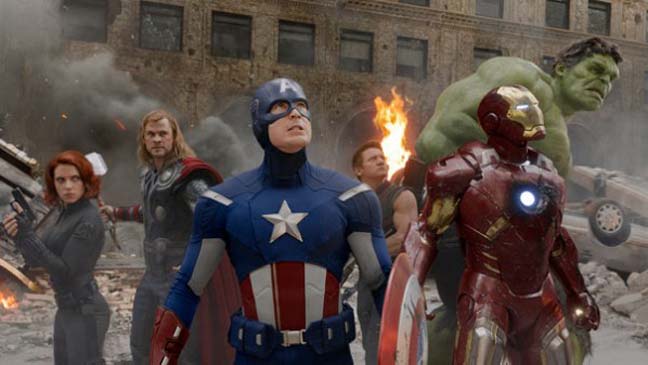
The Avengers in action

On so many levels, The Avengers is basically a glorious expression of everything I’ve ever loved about genre and pop culture. As a child, bringing together multiple characters was simply how I did it; that’s what toys were for. In my childhood games, it wasn’t unusual for Captain Kirk to join Spiderman, Superman and the Daleks for a face off against dinosaurs (f**k off, I’m copyrighting that, it’s mine!)… so the notion of superhero team events is basically wish-fulfillment on a massive scale: thank you, Mr. Whedon, for making this match-up so much more than the sum of its parts.

But that’s enough about Joss and the boys. Let’s talk about Scarlett.
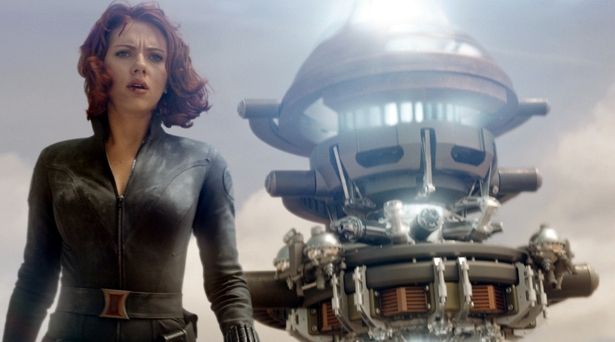
Scarlett Johansson as Black Widow in The Avengers

As the lone female, Scarlett Johansson had her work cut out. But she had Whedon on her side, one of the great feminists of pop culture, a true believer in the awesomeness and awesome power of women. Who better to make Black Widow unique and memorable, soulful and strong, kickass and funny? But having Johansson bringing Whedon’s words to life on the big screen was a truly special thing. She brought a stormy, sensual quality to the Black Widow/Natasha Romanov, playing her with a quiet strength interlaced with a hurt soulfulness, and a sharp intelligence, hidden like a knife, wielded with deadly precision and speed.

Yes, she kicked ass with the best of them, but her shivering, shaking vulnerability after just barely avoiding being killed by Hulk is just one example of what makes Natasha Romanov so human, and is one of the reasons this movie has so much heart and soul. Johansson gave the movie its warm yet broken & tortured soul. In the process, she made an airtight case for a standalone Black Widow movie.

I could keep going, but then the run time of this review would almost match the movie.

In conclusion, The Avengers was a majestic blend of humor, soulfulness, intelligence, mad thrills, and a visceral, always-building visual crescendo.
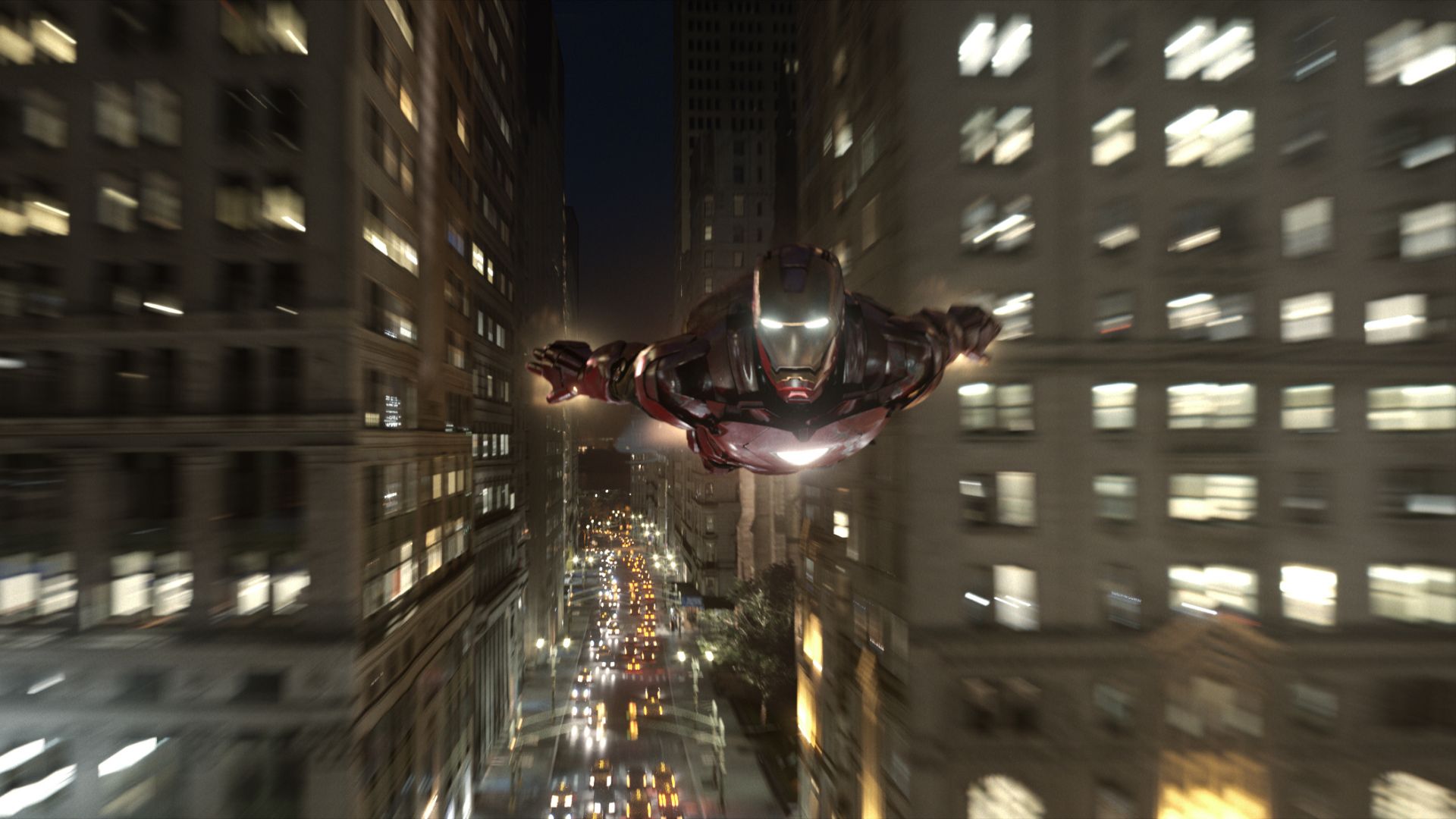
Iron Man

An extraordinary pop culture rush, in other words.

Final rating: five out of five quippy one liners.

SouthLAnd: “Thursday” — Moment Of Truth

SouthLAnd excels at forcing its characters into moments of truth.

Time slows down and a crossroads opens up before them: will they walk the righteous path, or sell their souls?

This entire season, Officer Ben Sherman has been following a path that lead him to the deadly decision: what kind of cop is he going to be? Each choice he’s made so far has taken him deeper into the darkness. By the end of God’s Work, he didn’t recognize who he was any more. Without that self-knowledge, his moral markers were gone, and no matter how hard Sammy tried, Sherman really had gone past the point of no return.

And in this episode, writer Jonathan Lisco and director Chris Chulack went full Taxi Driver to make sure Sherman went all the way over the edge.

Lisco’s script was flint-sharp and ruthless. Always an extremely emotionally and conceptually precise writer, here Lisco was even more ferocious with his dialogue and action. Every line had urgency; every beat ratcheted you closer to the end. The scenes were sharpened to deadly points and lethal edges. Such was the intelligence underlying the script that by the time Lydia walked into that hospital room where the burned child lay helpless, no dialogue was even needed as Lisco and Chulack gave us one of the single most upsetting images we’ve ever seen on this show.

SouthLAnd will devastate you with an almost casual ease.

While Sherman was off choking hookers for information, Cooper had to endure Tang’s frankly unendurable “last day on patrol” smugness. Much as I can’t disapprove of any reference to Nicki Minaj’s far-too-awesome Superbass, it was tough to watch Tang torturing that kid. If ever a Cooper “hey numbnuts” was needed, it was here. Likewise with getting Cooper to take her picture in front of the Hollywood sign. So the showdown near the end where Cooper lost it on her was a great SouthLAnd moment. Cudlitz deployed his emotional gravitas to punishing effect, while Lucy Liu gave it right back — she has done a tremendous job this season, holding her own scene for scene with an unfussy, powerful, stripped-back performance.

It was an episode of heavyweight performances.

Regina King broke our hearts, again. She does it so well, so simply. “What we do, it’s hard enough to not let it get to you… now it’s like it’s going in too deep. And if it is, where’s it going?”

Shawn Hatosy did incredible, soulful work. Even confined to a hospital bed at the start, and a deckchair by the pool at the end, he harnessed his “raging bull” energy and radiated it throughout both scenes. I pointed out a few weeks back that Hatosy has a unique way of prowling around a scene with restless, hungry energy; as SouthLAnd superfan Deb @bluegrassbabe3 pointed out today, even when Hatosy is sitting down, he’s still prowling; such is his presence. He’s a great, great actor.

But there’s no doubt that the episode belonged to Ben McKenzie. His portrayal of a man whose soul is being steadily stripped away was bleak, raw, understated and unflinching. He showed us an officer who shattered his previous self, and now has to find his way through the fragments of what he used to be. By the time that the episode closed with Sherman sitting back at the pool party as the Stones’ Street Fighting Man played on the soundtrack (spot-on song choice, and only the fourth or so time the show has used a song), it was as though he was settling in to his new existence. I’m not sure what’s more terrifying/devastating — that he lost himself to the darkness, or that he’s actually getting comfortable with it. Either way, it’s brilliant writing, setting up some great Bryant/Sherman story possibilities for season five.

Throughout the episode, Chris Chulack directed with a ruthless eye, as Jimmy Muro gave us a bleakly lit, cloudy, steely L.A. Chulack’s visceral style was honed to an even sharper edge than usual. If Sherman went racing round a corner, the camera would steadily follow him, like a shark, deadly and unstoppable. Everything was stripped back to an absolute purity of purpose. There were no skateboarding interludes in this episode. Just a ferociously relentless commitment to the truth.

Which is what this show has always been about. It’s why we love it.

It’s why SouthLAnd is one of the greatest TV dramas of our time, of any time. It’s why TNT has to renew it for an extended season 5. It’s why Warner Bros. really, really needs to release a deluxe Blu Ray box set with extended directors cuts, commentaries from writers, cast and crew, behind the scenes and the like — trust me, WB and TNT, if that box set comes out in enough time for new viewers to watch all four seasons prior to the season five opening episode, your ratings will be extraordinary. Can you imagine The Walking Dead or Game Of Thrones or Mad Men not being on DVD?

Exactly.

It’s been an amazing season four. The writers, the cast, the crew — they’ve all excelled themselves, raising the bar yet again, like this show always does. SouthLAnd is better than its ever been — which is rare for a fourth season. It’s rolling hard. And it leaves no doubt that season five would be the greatest yet.

Thank you to everyone involved with the show. I was fortunate enough to meet the cast and crew in L.A. recently; they are an incredibly smart, humble, hardworking, talented bunch, all utterly commited to making this show the best on TV.

It’s working.

I can’t wait to to tune in next year and hear once more, this is A36, show us handling.

SouthLAnd takes a “Risk”

It’s a testament to the unmatched greatness of SouthLAnd that in its 32 episodes to date, it has raised its quality bar to a dizzyingly brutal degree.

When this show blows up and comes at you, it’s identical to none.

So when the occasional scene doesn’t quite get it done, you feel it. And, brutal truth (SouthLAnd style), there were some scenes in Risk, early on, that felt somewhat more perfunctory than usual, that didn’t seem to grab us emotionally, or propel us forward. Some of the dialogue didn’t zing like it normally does, and moments that should have been impactful felt discarded too soon.

But it all came together brilliantly at the end, when Jimmy Muro wreaked havoc at the intersection of Elysian Park and Sunset. Those final few scenes with Lydia, Ben and Sammy were a devastating gut punch followed by a massive right hook to the head that left you on your ass seeing stars.

Like only SouthLand can.

Muro was truly the MVP of this episode: the climactic car chase/shooting/traffic collision was as off the hook and heart-poundingly, breathlessly visceral as anything the show has ever done. You thought Cooper’s throat-savaging was intense — you weren’t even ready for the crushingly sudden, shocking action here.

Time and time again, the show has shown us that all cops live in constant state of unknown trouble — anything can happen at any time. SouthLAnd will slam your expectations off the street and total them as quickly and easily as the SUV took out Sammy’s patrol car. This scene was a masterpiece. Most of the time, the show likes to obliterate its characters’ belief systems with brutal emotional collisions: this time it did it literally, totaling the patrol car in a devastating, terrifying way. It took your breath away and flooded you with adrenaline.

It left you shaking.

Give Muro any and all awards you can find please.

He did great work with Risk: the backdrop to Lydia and Ruben’s case — that mountain range of cranes against the steel sky — was beautifully, almost philosophically, bleak and austere, and fully deserved the multiple shots and angles. It was absolutely a commentary on the action: a sense of hopelessness, of things never changing.

Elsewhere, Muro found numerous ways to give us glimpses of downtown L.A. through the mid-afternoon haze, like a monster looming through the mist. And he broke out what felt like lesser-used angles for SouthLAnd: putting the camera on the outside of the passenger side looking squarely in on the driver, or hanging out the back window to look along the left side of the car during extended driving scenes. These were new textures to the show’s visual language, and they worked. He also gave us the sheer rush of skateboarding down an empty road at 40 mph — from the unfiltered clarity of the lens to the endless blue sky. It was a simple moment of euphoria.

But nothing can compare to the simpler shots of Regina King doing her finest, rawest acting of the season to date (so good and so distressing that it really messed with the viewer), and that car crash — and unlike what happened after Integrity Check, this time the promo for next week gave nothing away, leaving us in agonizing suspense about Sammy’s fate.

Let’s be clear: SouthLAnd will kick your ass. Every time. Because it’s a beautiful, brilliant show. When it’s flawless, nothing can beat it. Even when it doesn’t quite get there some of the time, you know it’s gonna sock you upside the head by the end, and when it does, there’s nothing you can do about it.

TNT, you gotta renew this m***erf***er. It’s truly phenomenal television. You knew it when you saved it from NBC. You knew it when you gave us this amazing season 4.

You still know it.

So please — give this show a 20-episode season 5, and incredible things will happen. SouthLAnd is your Mad Men, your Walking Dead, your Game Of Thrones.

Treat it that way, and it will become something unprecedented in TV. Even more than it is now.

Respect to the cast and crew: bring on that season finale!

Random observations:

  • Kudos to Chitra Sampath for contributing the “she didn’t say the safe word” elements of the  S&M domestic dispute — adding the perfect spin to one of the show’s more awesomely insane highlights.
  • Some of the other situations were kinda beautiful in their oddball charm — who couldn’t love drunk golf ball guy?

Californication: “…the truth is what you need to finish this song…”

In Love Song, the sixth episosde of Californication‘s fifth season, creator and showrunner Tom Kapinos wrote a soulful, wistful and melancholic look at missed opportunities, love and authenticity.

Samurai Apocalypse (portrayed with insane style and panache by RZA) ordered his Santa Monica Cop screenwriter Hank Moody to write lyrics for budding songstress Kali. As Hank forced Kali to delve deeper into her memories, he got lost in his own, giving us black-and-white flashbacks to the moment when Hank and Karen first decided to stay in L.A.

(Whenever Kapinos shows us Hank and Karen’s past, he writes scuffed and dirty emotional riffs that move you. These episodes are rock-n-roll ballads, bluesy guitar solos, romantic, whiskey-soaked tales of all that could have been, and all that might yet be, if no one f**ks it up.)

As Hank re-lived this moment in time, while drawing lyrical inspiration from Kali’s increasingly painful memories, the theme became abundantly clear:

What makes your writing truly yours, what makes it really sing… is you.

Your soul. Your authenticity. Your truth. Nothing less than the absolute revelation of what you really, truly, need and want. Getting to the truth of who you are and why you do what you do. What drives you, what do you dream of? What makes you want those things, and what will you do — and give up — to get them?

Find the truth about who the f**k you are and how you fit into this world. Because you do fit into this world, even if you don’t know how yet. Some people know right away. Some take thirty years, some fifty or more. It’s OK. Your life is all about you, m***erf***er. Act accordingly.

Nothing you write will be good until you inject yourself into it. It’s what Dave Grohl talked about at the Grammys when he said music isn’t what happens inside a computer. He wasn’t ranting against technology itself, against any of the tools of making music; he was ranting against soulless music, which can just as easily be made with a guitar as an iPad. And the flip side is true: soul will always come through, must always come through, however you make your art.

Consider two extraordinary and seminal albums: The White Stripes’ Elephant, and Massive Attack’s 100th Window. The first made only on equipment dated pre-1963 (it’s a Jack White thing), the second made on laptops and in digital worlds, with songs and textures that couldn’t exist before 2003.

Both have beauty and soul, in different ways: Elephant is rough, heavy, pounding and wild, while 100th Window is hypnotic, evocative and dreamlike. Both are true and truthful, and it doesn’t matter how they were recorded or how we listen to them: the souls of the people who created them shine through, make them real; making them connect.

Whether you write poems, stories, novels, songs, or scripts, you need to make them yours, write them your way. Quentin Tarantino kept getting told that True Romance wasn’t written properly, that this wasn’t how scripts are done. He said, f**k you, because this is me and this is mine. Then he made Reservoir Dogs, and Tony Scott shot True Romance, and then came Pulp Fiction. Tarantino-esque became its own literary style and took over pop culture. All iconic & unique writers do.

Ultimately, being a writer, being any kind of artist, is all about you being authentic. That will shine brightly; the rest will follow.

So find your truth and finish your song.

Then let the world hear it.

SouthLAnd: “God’s Work” – Emotional Survival For Law Enforcement

If I made this review as brutally to the point as this episode was, I’d simply say this:

Cheo Coker wrote a beautiful, kick-ass script and Guy Norman Bee directed the f**k out of it, while Ben McKenzie turned in a devastatingly primal & raw performance.

But there’s so much more to say.

I’ll start with the obvious: this was one of SouthLAnd‘s strongest episodes. It was stripped back to the bleached bones of the L.A. landscape, and the most primal elements of the characters’ souls. It was beautiful in its simplicity, its refusal to waste time or words. As Cooper said in his final scene, “that simple?” To which his sponsor Lamar replied: “Yeah. All the hard things are.”

That stark sense of truth began with Coker’s script, which was one of his best. If his other script this season, Underwater, was a crazy block party, full of overflowing life and violence and jokes and energy, God’s Work was the head-pounding contemplation the next day.

It pumped out killer lines like bullets from an endlessly reloading shotgun, one after another after another (most of which came to Shawn Hatosy, who swung for the fences and knocked every single one easily out of the park with absolute style). It had Coker’s unique and fiery old-school soulfulness. And it thumped like a booming hip hop beat when it had to.

But it submerged all that in a deep, quiet calm, the serenity to accept the things we cannot change… a zen purity of purpose. We glided across the waters of this one, all the way to the perfect storm at the end, when the Kraken woke. This was like some classic Greek shit. Everyone contained the seeds of their own destruction and salvation, and the only question was what choice each character would make, which path they would take.

This was all great drama is supposed to be, and what so little drama actually is. It’s what SouthLAnd does better than any other show: forcing characters to confront their deepest flaws or fears, sending mack trucks juggernauting into their moral schemes and belief systems. It’s a show that will utterly demolish everything its characters believe in, because it’s about how we react when everything is on the line. Stakes are sky high. Officer Ben Sherman was on the receiving end of this treatment last season when the truth about his mother’s assault was revealed. And Sherman had to face the darkness again in God’s Work, and somehow keep his soul.

This was the finest work of Ben McKenzie’s career to date, which is saying something, because he’s a damn great actor. SouthLAnd is about raising the bar with every episode, every act, every beat. McKenzie was there all the way, showing us a man whose soul is being ravaged by his own inner darkness, the rage that he’s always keeping buried. It was a haunting and raw performance, as Sherman couldn’t stop, maybe didn’t even try to stop, himself from descending into hell.

Coker’s script took him there, along with the astonishing direction of Guy Norman Bee, a former steadicam operator on ER who has since gone on to direct Veronica Mars, The Secret Circle, The Nine Lives Of Chloe King, and, most regularly, Supernatural.

He brought an incredibly detailed and quietly unobtrusive eye to this episode. It was stark and architectural in its complex yet dynamic visual style. This was Michael Mann-level directing. Bee’s eye for the complexity of lines in the composition of the shot made every frame fascinating and kinetic, but in the most subliminal of ways, subsumed into the flow of the story (just like in the script). The descending concentric circles of the parking lot when Lydia looked down at “the splat.” The angles of the stairwell playing against the lines of Sherman and Bryant holding their guns going up the stairs in the squatter house. The frames and windows of the offices where Tang had her interview. It was all beautifully done, creating a stark, rotating landscape for the tense drama to play out against.

Bee was backed up by lighting maestro Dana Gonzales, who brought a haunting glow to the rough, over-saturated streets of L.A. The opening scene, as Cooper and Lamar talk, was simply gorgeous, as early morning light hung in a hazy gauze over the skyscrapers, and a thousand little lens flares rippled up from the lake. From there it got darker and starker, all the way to the primally lit scene at the end, when Bryant lays it all down for Sherman. It was eerie, spine tingling: the two men sat in deep shadow and the coldest, barest lines of light just lit their edges. Shawn Hatosy gave a stunning, Brando-esque reading of those great, classic lines: “you’re my partner…. I’ll back you up, punch for punch…”

It was f**king poetry on every level, like everything in this episode, from the largest moment to the smallest. As Cooper contemplated his own intense set of options in his briefer scenes, Michael Cudlitz brought the gravitas like a true master, finding the highest level of impact through the smallest of gestures and motions, making us feel the soul-shaking implications of his future choices. In his short scene, Tommy Howell brought a sinewy soulfulness to “Uncle Dewey”‘s meaningful and moving scene with Tang. And let’s take a moment to praise Jamie McShane, who always brings grit and steel to the role of watch commander Sgt. Hill, even in the space of a line or two. His ability to bring such presence to brief moments in some ways sums up the show: it’s all in the power of the details.

No review would be complete without a callout to the day players, including The Wire‘s Lawrence Gilliard Jr playing Lamar with a poetic, fresh rhythm; Oz Zehavi doing fine work in his first U.S. TV role as Eric Hanson; and Kelly Wolf as Cheryl Hanson, wringing huge emotions from the briefest of moments. They — and all the others — were great, bringing soul and heartbreak to the surface in perfectly fragmented, naturalistic ways.

SouthLAnd‘s toughest challenge is often to explode the traditional narrative, fragment it until the shards are still touching and connected, but just barely. It went above and beyond in this regard with God’s Work. Every scene flowed deep into all the others, but never in a contrived way. It was a masterclass in script DNA.

It’s getting harder to review this show, to be honest, because it keeps getting better, and it rarely misses a step. Remember how it seemed like it exploded out of the gate with the pilot episode, Unknown Trouble? Well, it did, and it was fantastic… but it’s undeniable, and kind of mind-blowing: it’s operating on a much higher level now.

It keeps finding extra gears, and it’s pretty clear at this point: it’s just going to keep finding more. Season Five seems all but assured when the show is rolling so hard. As Cudlitz likes to say, with this show, you have to expect the unexpected. But there’s one thing we can always expect, and we always get: greatness.